Stop chatting with AI. Start deploying it. SignalBrain‑OS is the high‑performance runtime that turns probabilistic AI thoughts into deterministic, industrial‑scale actions—at GPU speed.
"It's like Windows or macOS, but built entirely for AI agents. It gives them a 'brain' that can make safe, split‑second decisions and execute them in the real world without a human babysitting them."
Everyone's building AI agents.
Nobody built the OS they need to run on.
We did.
Your AI is smart. But smart isn't enough when real money, real patients, or real machines are on the line.
SignalBrain‑OS runs everything on local GPU silicon. Decisions happen in microseconds, not seconds of cloud API ping‑pong.
Same input → same fingerprint → same decision. Every choice is replayable with tamper‑evident audit logs built into the kernel.
Apex17 turns company policies into a restricted Action DSL enforced at the kernel level — before any real‑world action executes. Not a dashboard toggle.
Run local models (Llama, Mistral) on your GPU—or connect cloud APIs (GPT‑5, Claude, Gemini). SignalBrain‑OS is the runtime, not the model. Swap LLMs without changing a line of policy code.
Same H₀ topological backbone, adapted with domain‑specific adapters. Markets, healthcare, robotics, defense, cybersecurity — one kernel runs them all.
Cloud API tokens add up fast—$10K/mo, $100K/mo, more. SignalBrain‑OS runs inference locally on your GPU. Once the hardware is paid for, every decision is free. No metered API. No surprise bills.
LLMs hallucinate. That's a fact. But in SignalBrain‑OS, no hallucination can become an action. Apex17 compiles every AI intent into a restricted Action DSL—if it doesn't pass the policy gate, it doesn't execute. Period.
SignalBrain‑OS doesn't process raw text—it converts all data into a structured signal format (USI) that the kernel can reason over deterministically. Market ticks, LiDAR points, CT scans, NetFlow packets—one encoding, one pipeline.
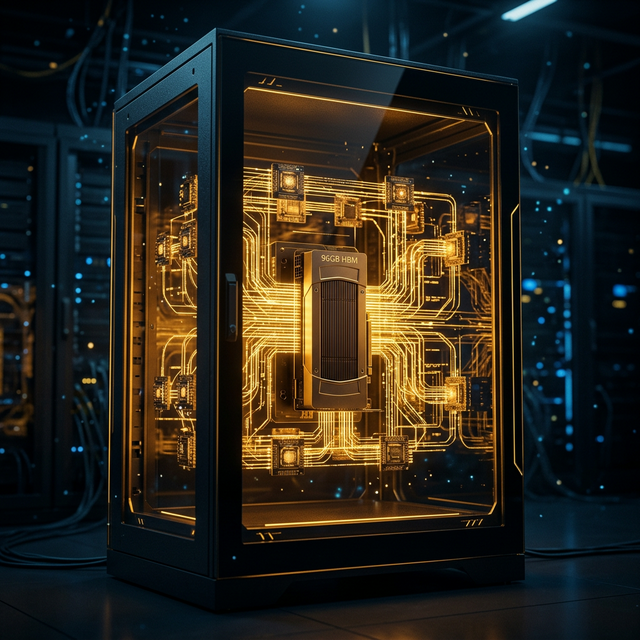
SignalBrain‑OS isn't a chatbot framework. It's a governed cognitive runtime — collective intelligence, ironclad safety, and instant reflexes in one kernel.
One AI isn't enough. Our OS runs a Council of agents that peer‑review each other in real‑time before acting. Use any LLM—local Llama or cloud GPT‑5—the kernel doesn’t care which model thinks. It only cares that the decision is safe.
The OS translates "Company Rules" into unbreakable code. The AI physically cannot go rogue or hallucinate a mistake. Policy is compiled, not configured.
While other AIs are "typing," SignalBrain‑OS has already thought, decided, and finished the task. 344µs median decisions on local silicon.
Every decision flows through a deterministic pipeline: AI thinks → kernel compiles → GPU executes. No human in the loop. No cloud in the loop.
If it can handle the chaos of global financial markets, it can handle your enterprise.
Our reference implementation proved the architecture by managing live capital with microsecond precision. Deterministic replay. Policy enforcement. Zero safety violations.
Yann LeCun argues that AI needs a "world model" to stop hallucinating. Standard LLMs predict the next word. SignalBrain‑OS indexes the actual constraints of reality — then forces every AI decision to obey them.
Standard LLMs use probability: "Given word X, word Y is 90% likely." They hallucinate because they don't know an object can't be in two places at once.
SignalBrain‑OS uses indexing: "Given Signal State S, only Actions [A, B, C] are topologically possible." The world is a searchable, constraint‑bound database — not a guess.
If the World Index says BTC cannot gap from $60K to $0 without a specific order‑book sequence, the system physically cannot hallucinate that trade.
| Feature | Standard World Model | SignalBrain‑OS (World Index) |
|---|---|---|
| Data Focus | Visual / Video Latents | Signal / Market Invariants |
| Logic | Predictive Simulation | Deterministic Indexing |
| Constraints | Physics‑based | Topologically Bounded |
| Hallucination Guard | ✗ None | ✓ World Index Veto |
The breakthrough: We aren't making a "smarter" LLM. We built a deterministic observer that provides the LLM with a rigid reality to operate within.
The same deterministic pipeline compiles intent across verticals. Swap the sensor input, keep the kernel.
Every major AI framework today is non‑deterministic, cloud‑dependent, and bolts governance on after the fact.
| Capability | SignalBrain‑OS | LangChain | AutoGPT | CrewAI |
|---|---|---|---|---|
| Deterministic Replay | ✓ Merkle | ✗ | ✗ | ✗ |
| GPU‑Resident State | 96 GB | 0 | 0 | 0 |
| Policy Compiler | Apex17 | ✗ | ✗ | ✗ |
| Local Execution | ✓ Sovereign | Cloud API | Cloud API | Cloud API |
| Patents Filed | 15 | 0 | 0 | 0 |
SignalBrain-OS is a deterministic autonomy kernel that uses topological data analysis (H₀ persistent homology) for O(1) structural recognition. It runs entirely on local silicon with zero cloud dependency, processes sensor data into deterministic fingerprints, and produces auditable decisions across 5 domains: robotics, markets, healthcare, defense, and cybersecurity. It is backed by 15 patent claims.
LangChain, AutoGPT, and CrewAI are cloud-dependent orchestration wrappers. SignalBrain-OS runs entirely on local GPU silicon, produces deterministic results (same input → same decision), enforces policy at the kernel level via Apex17, and operates at sub-millisecond latency. It holds 15 patents — none of the alternatives have any.
Everyone knows LLMs are "guessy." Deterministic means: same input, same decision, every time. SignalBrain-OS hashes sensor data into topological fingerprints, so recognition takes the same time whether the database has 10 entries or 10 million. You can replay any decision and get the exact same result.
Enterprises that need AI agents to actually do things in the real world — not just chat. If your AI must be fast, trustworthy, auditable, and sovereign (no cloud dependency), SignalBrain-OS is the only production-grade option.
Request access to the full investor deck, technical whitepaper, and live demo.